

ARCHITECTURAL ART
Architecture is often described as frozen music—lines, masses, and rhythms arranged into a language of permanence. Portraiture, by contrast, is fluid, intimate, and fleeting. Yet when the two meet, something extraordinary happens: the human face becomes a structure, a façade, a vessel for memory and metaphor.
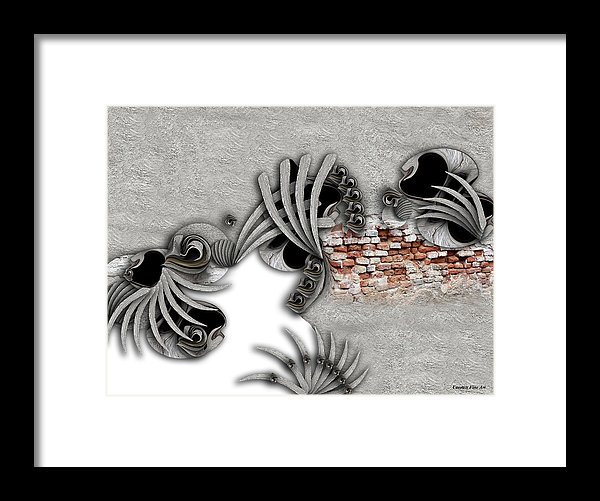
This gallery explores that intersection. Each artwork in this collection uses architectural elements—brick, plaster, geometric sequencing, structural rhythm—to reinterpret the portrait as a built environment. The result is a series of images where emotion is constructed, deconstructed, and rebuilt in stone, line, and surreal transformation.
ARCHITECTURE AS IDENTITY, IDENTITY AS STRUCTURE
Across these seven works, architecture becomes more than a backdrop—it becomes a language for understanding the human face. Brick walls stand in for memory. Cracked plaster reveals vulnerability. Geometric sequences echo emotional rhythm. Surreal distortions challenge the boundaries of what a portrait can be.
Together, they form a gallery where identity is built, unbuilt, and rebuilt—one line, one shadow, one imagined structure at a time.
1. Pastel Ghost in Morning Light
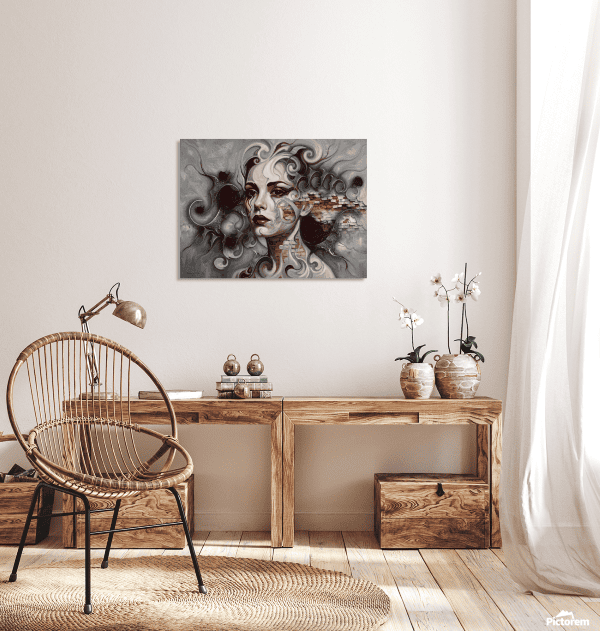
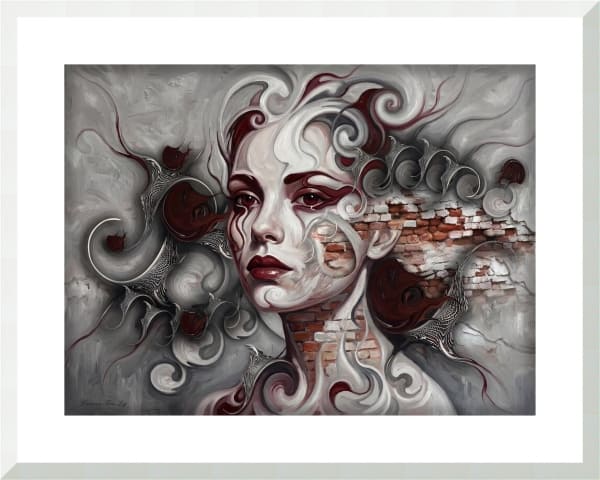
A woman’s face emerges with exquisite clarity, as if carved from morning air. Around her, swirling organic forms drift like soft architectural ornamentation—half‑plaster, half‑mist. Behind her, a brick wall anchors the composition, grounding the ethereal with the tactile.
This portrait feels like a threshold: the moment when a structure catches the first light and reveals its hidden textures. She is both apparition and architecture, a ghost built from pastel luminosity.
2. Geometric Sequence
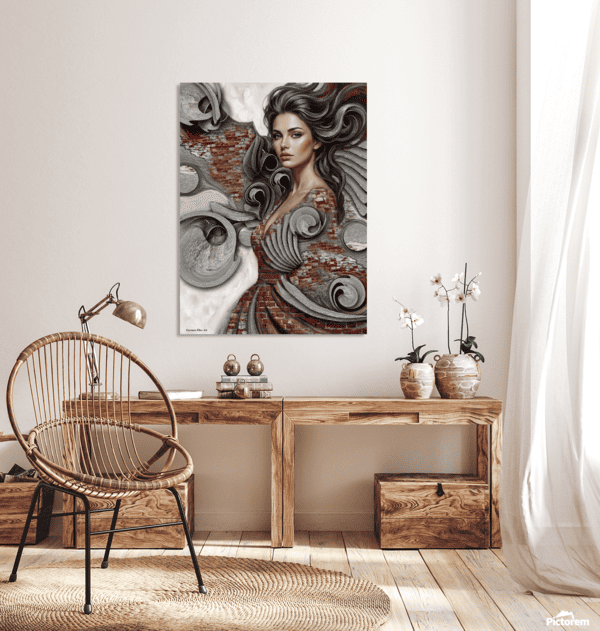
Here, the brick wall becomes a dominant structural force—almost a character in itself. The central female figure stands before it with quiet authority, her presence softened by the realism of the masonry behind her.
The interplay between human softness and geometric rigidity creates a visual rhythm, like alternating columns in a façade. The portrait becomes a study in balance: the organic curve of a cheek against the strict linearity of brick.
3. Supposed Emotion
Emotion is the architecture of the unseen, and this portrait makes that literal. The woman’s face fills the frame, expressive yet contained, while the brick wall behind her introduces a contrasting texture—rough, grounded, unyielding. The juxtaposition suggests a tension between inner feeling and outer façade. The wall becomes a metaphor for the structures we build to hold ourselves together, even when emotion threatens to spill beyond the frame.
4. Portrait of a Thought Unraveling
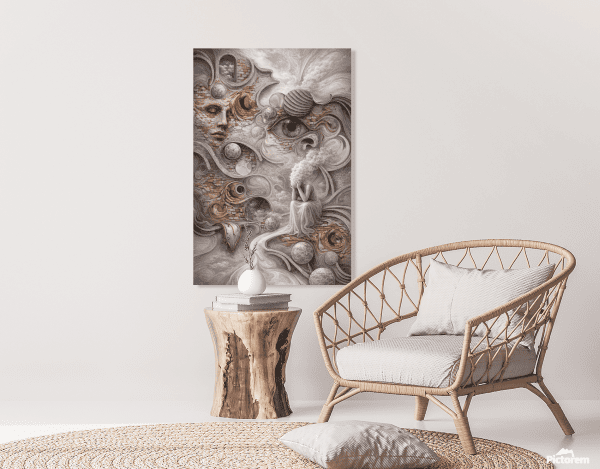
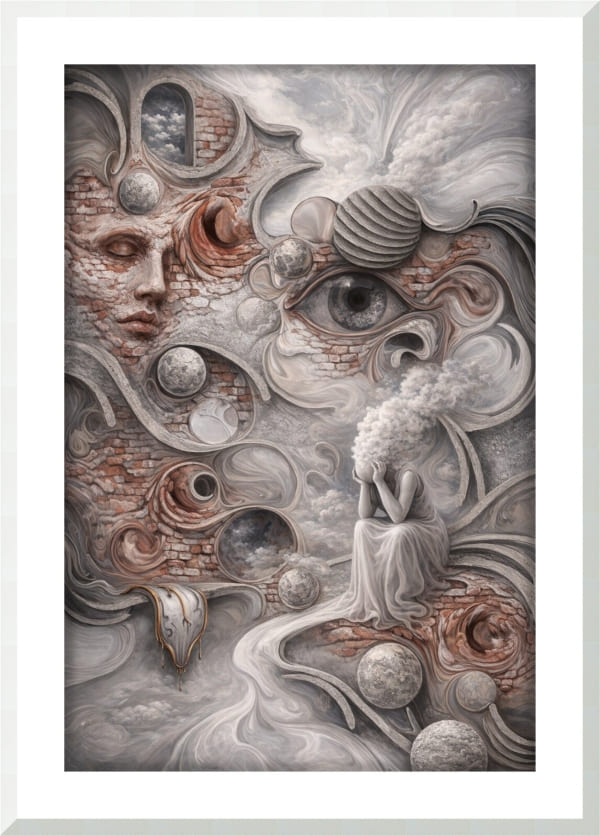
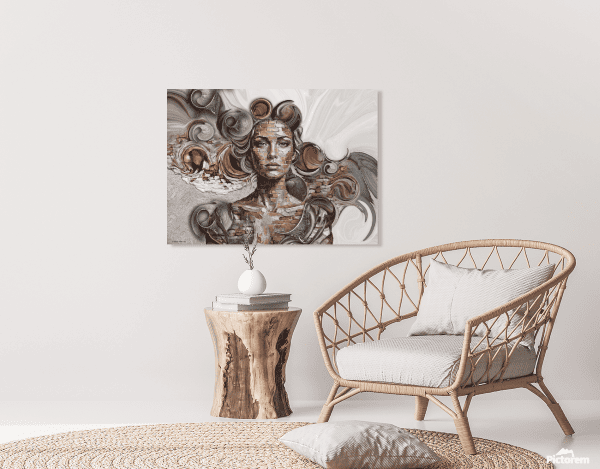
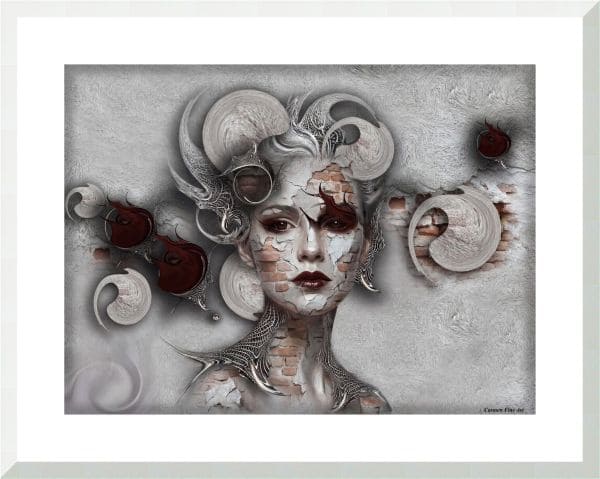
In this piece, architecture becomes anatomy. The woman’s face is constructed from brickwork, its surface covered in cracked plaster that reveals the structure beneath. Organic and geometric forms intertwine, as if thought itself is peeling back layers of material.
It is a portrait of mental architecture—how ideas form, fracture, and rebuild. The cracks are not flaws but pathways, revealing the scaffolding of introspection.
5. The Sensitive Expression
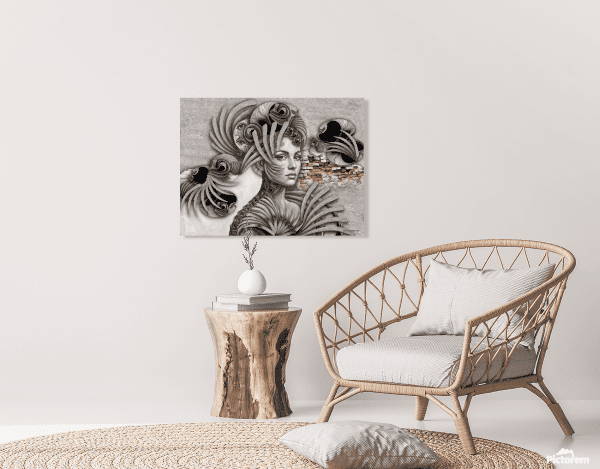
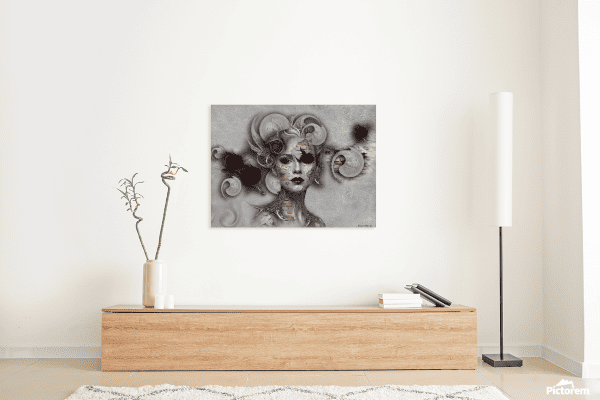
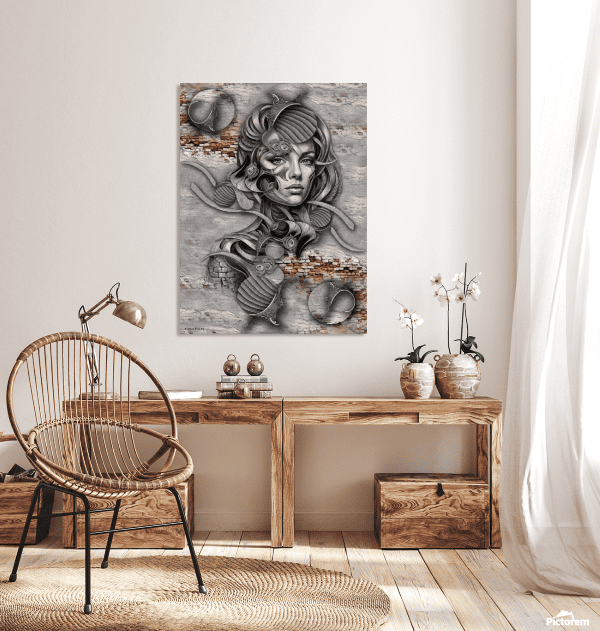
Rendered entirely in grayscale, this portrait leans toward the sculptural. Line work becomes chisel marks; shading becomes carved relief. The woman’s face appears almost like a stone bust caught between realism and graphic abstraction.
The absence of color heightens the architectural quality. Texture becomes the narrative. Every line feels intentional, like the etched grooves of a monument designed to withstand time.
6. High Sketch of Pure Feeling
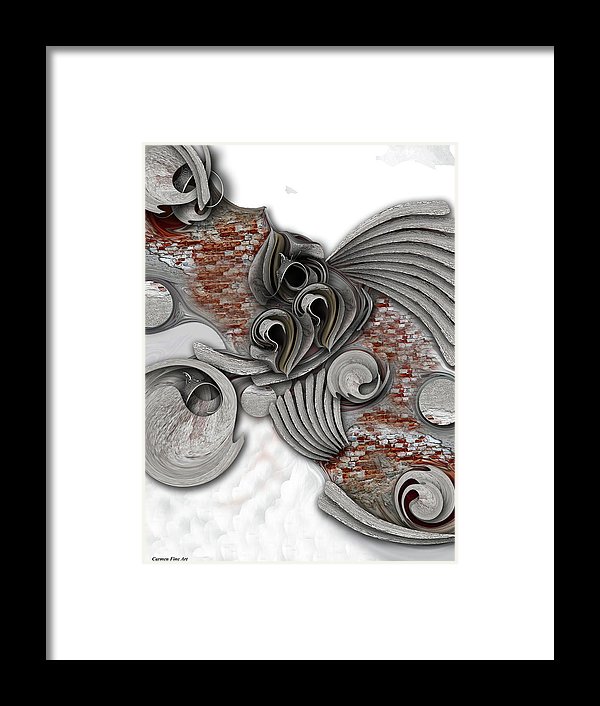
This composition is a complex weave of portraiture, brickwork, and swirling textures. The woman’s face emerges from the interplay of structural and organic forms, as if emotion itself is being drafted like an architectural sketch.
The result is dynamic—part blueprint, part dreamscape. It captures the sensation of feeling something intensely before it fully forms, like tracing the outline of a building before the walls rise.
7. Vision & Morphism
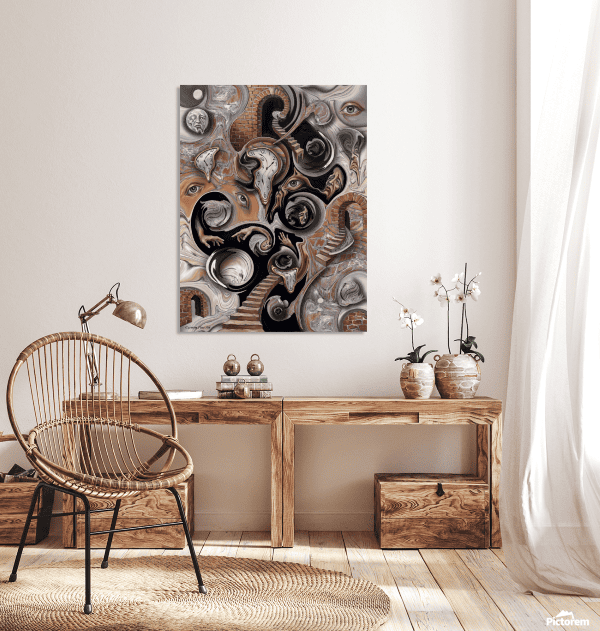
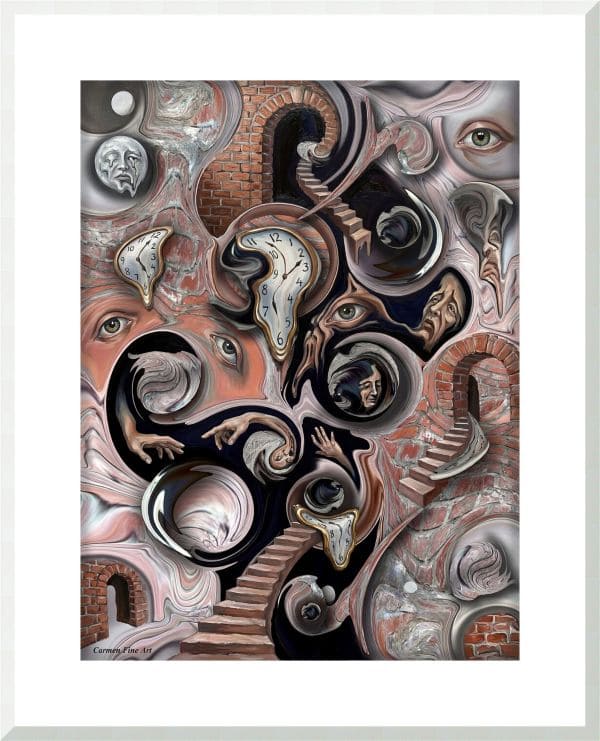
The surrealist anchor of the collection, this artwork channels the spirit of Dalí with its fluid distortions and dreamlike logic. The portrait dissolves into architectural impossibilities—shifting planes, melting forms, and symbolic structures that defy gravity.
It is a meditation on perception: how reality bends under the weight of introspection. Architecture becomes metaphor, portrait becomes puzzle, and the viewer is invited to wander through the labyrinth of the mind.
HTML Checker
COLOR WHISPER BLOG PORTFOLIO
- "Faces Built from Stone & Light: An Architectural Portrait Gallery"





 office@carmenfineart.com
